Calories in Indian Food: Roti, Dal, Rice, Paneer and More (Simple Guide)
Approximate calories for the foods most Indians eat every day — and why the ghee and oil, not the roti, usually decide your total.
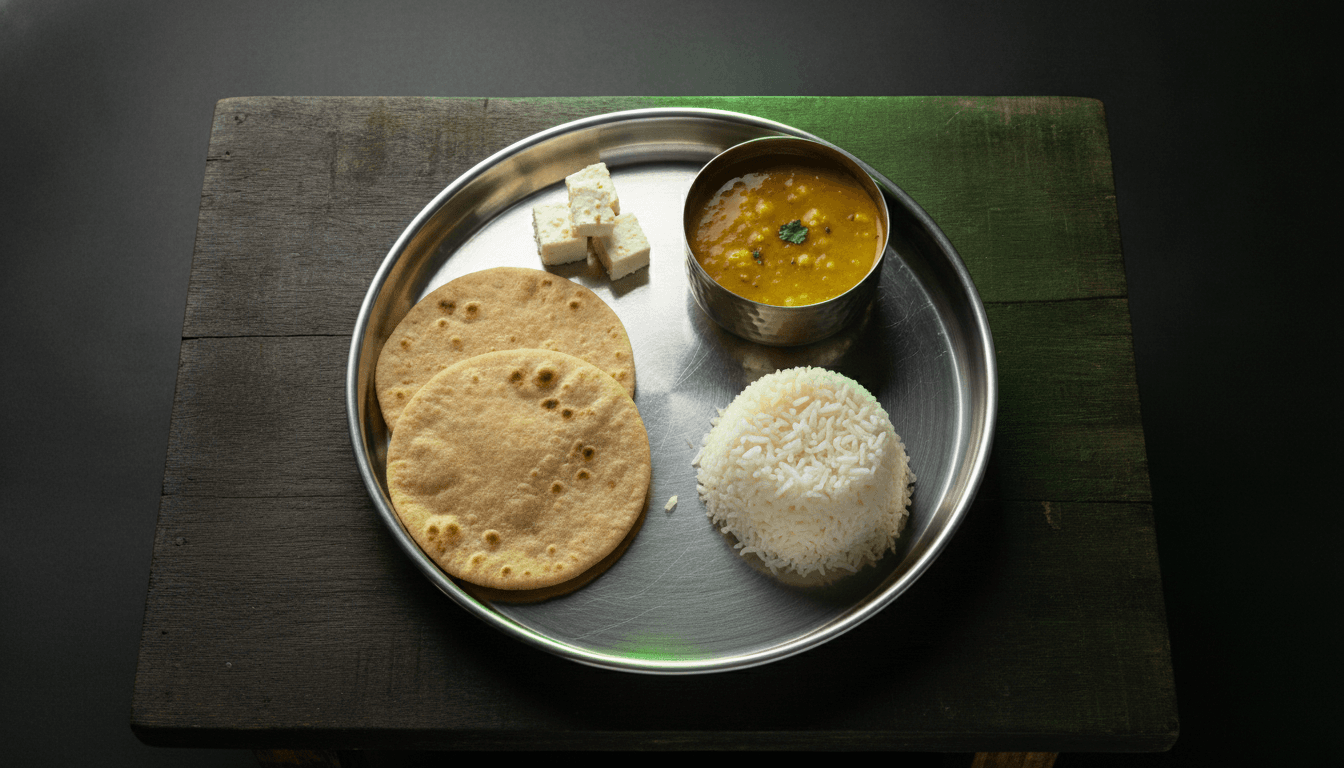
A plain medium roti has roughly 80–120 calories, a katori of cooked white rice roughly 180–210, a katori of plain cooked dal roughly 100–150, and 100 g of paneer roughly 260–320. The biggest swing in any Indian meal is the cooking fat: one teaspoon of ghee adds about 45 calories and one tablespoon of oil about 120, so the same dal can be 120 or 300 calories depending on the tadka. All figures here are approximate and vary with portion size and recipe.
How many calories are in one roti?
About 80–120 calories for a medium plain whole-wheat roti, depending mostly on its size and thickness — whole-wheat chapati is roughly 260–300 calories per 100 g. Add about 45 calories for each teaspoon of ghee or butter on top. A phulka made without fat sits at the lower end; a thick, buttered roti at the top.
How many calories are in a bowl of rice?
About 180–210 calories for a katori (roughly 150 g) of cooked white rice, since cooked rice is about 130 calories per 100 g. Rice itself is not high in calories by weight — it is the second and third helping, and the ghee on top, that add up.
How many calories are in a katori of dal?
About 100–150 calories for a katori of plain cooked toor or moong dal with a thin consistency, before tadka. A tadka with one tablespoon of oil or ghee adds roughly 120 more, and thick restaurant-style dal makhani with cream and butter can be two to three times higher. Dal is also one of the cheapest sources of protein in a vegetarian diet, so it is worth keeping — just watch the tadka.
What about paneer, eggs, milk and fruit?
Roughly: paneer 260–320 calories per 100 g (more for full-fat); one large boiled egg about 70–80; a glass (200 ml) of toned milk about 115–120; one medium banana about 90–110. Paneer and eggs are good protein sources, but paneer is also high in fat, so a 200 g paneer curry is a big meal on its own.
What is the easiest way to count calories in home-cooked Indian food?
Weigh your usual katori, spoon and roti once, so you know what "one bowl" means in your kitchen. Then count the cooking fat separately — that single habit fixes most underestimates. You do not need to weigh every meal forever; a week of measuring is enough to calibrate your eye.
Where FitNexus fits
In FitNexus you can log a meal by taking a photo: the scan recognises Indian dishes, estimates calories and protein, and shows how confident it is so you can adjust the portion. Free accounts get a set number of meal scans each day, and your most-logged meals appear as one-tap suggestions at the right time of day, so logging your usual breakfast takes seconds.
Key takeaways
- Approximate: medium roti 80–120 kcal, katori of rice 180–210, katori of plain dal 100–150, paneer 260–320 per 100 g.
- Cooking fat is the hidden variable — 1 tsp ghee ≈ 45 kcal, 1 tbsp oil ≈ 120 kcal.
- Values are approximate, based on IFCT 2017 (ICMR-NIN) and USDA FoodData Central; recipes and portions vary.
Free to start, no credit card required
See FitNexus pricing